I have worked in conservation science for 20 years. Info about my career path is below. You can also read my scientific publications.
Nature Conservancy of Canada (NCC)
I lead the Science and Research Program at the Nature Conservancy of Canada (NCC). That includes collaborations with >150 research partners across Canada and internationally, directing an extraordinary fellowship program for early-career conservation scientists, and ensuring that conservation practice and policy use the best available evidence.
More about NCC's science and research here and via the images below.
More about NCC's science and research here and via the images below.
|
|

The Weston Family Conservation Science Fellowship Program was featured in NCC's Fall 2023 magazine.
|

Me joining the Nature Conservancy of Canada to lead the Science & Research Program was featured in NCC's Spring 2023 magazine.
|
Yellowstone to Yukon (Y2Y)
|
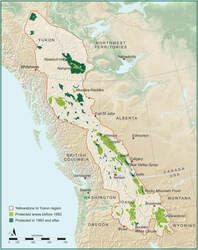
From 2017 until 2022, I worked as the Conservation Scientist at the Yellowstone to Yukon Conservation Initiative (Y2Y). I developed and led Y2Y's science program across the 2400 km long Y2Y region.
The Y2Y mission is "to connect and protect habitat from Yellowstone to Yukon so that people and nature can thrive". Y2Y collaborates with many researchers, practitioners, and communicators, and >450 partner groups across the 1.36 million sqkm Yellowstone to Yukon region. My research included biodiversity and ecosystem services, protected areas expansion, supporting Indigenous-led conservation, the ecology and conservation of species at risk (e.g., wolverine, mountain caribou), outdoor recreation, and the human dimensions of conservation. |
|
Postdoc: Marine spatial planning
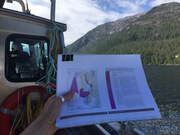
My postdoctoral research at the University of Victoria focused on the ecological, social, and economic outcomes of proposed marine plans and management in coastal British Columbia, Canada. I worked with the Natural Capital Project, the Central Coast Indigenous Resource Alliance, and leaders and resource stewards from the Kitasoo/Xai'xais, Heiltsuk, Nuxalk, and Wuikinuxv Nations.
More about the Marine Plan Partnership (MaPP) here.
More about the Marine Plan Partnership (MaPP) here.
PhD: Tropical forest restoration
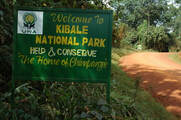
My PhD research at McGill University was about biodiversity and ecosystem services in Kibale National Park, Uganda. I worked with Makerere University and the Uganda Wildlife Authority to study how logging, burning, farming, and replanting native and non-native trees affected forest regeneration, food for large and medium-sized mammals, carbon storage, and timber and non-timber forest products.
A compilation of theses and literature about forests and biodiversity in Kibale NP and Uganda are here.
A compilation of theses and literature about forests and biodiversity in Kibale NP and Uganda are here.
Some of my previous work
And a story about crucial lessons learned during my first field job...